Showing posts with label Woman. Show all posts

Monday, February 24, 2014

Article # 578. Foods to avoid while Breastfeeding


·         Coffee

When you drink coffee (or soda or tea), some of the caffeine ends up in your breast milk. Because babies aren’t able to excrete caffeine as quickly or efficiently as adults, too much in their systems may lead to irritation, crankiness, and sleeplessness. The solution? Cut back on coffee. As tired as you are, a fussy baby who won’t sleep just makes matters worse. At minimum, try putting off your cup of coffee until just after a nursing session.

·         Chocolate

Proceed with caution if chocolate is your sweet indulgence of choice. Just like coffee and soda, chocolate contains caffeine. (Though not as much—a 1-ounce serving of dark chocolate contains between 5 and 35 mg of caffeine; a cup of coffee generally contains up to 135 mg of caffeine). If you suspect chocolate is the culprit behind your baby’s fussiness, eliminate it from your diet for a few days. If you see a change in your baby’s behavior—for the better—continue to abstain or cut back.

·         Citrus Fruits

Certain compounds found in citrus fruits and juices may irritate a still-immature GI tract, leading to fussiness, spitting up, and even diaper rash in some babies. If cutting down on citrus seems like a good idea for Baby’s sake, compensate by adding other vitamin C-rich foods to the menu, including papaya and mango.

·         Alcohol

It’s not the occasional glass of wine with dinner that you need to worry about. One drink or less per day likely poses little risk for babies, experts agree. But if your drinking habits fall into the moderate or heavy category, you are treading into murky waters. According to the American Academy of Pediatrics, possible side effects of breastfeeding and habitual consumption of large amounts of alcohol include: drowsiness, deep sleep, weakness, and abnormal weight gain in the infant, and the possibility of decreased milk-ejection reflex in the mother.

·         Spicy Foods

Some nursing moms can add extra jalapenos to everything and still have completely content babies. But you might find that just a dash of pepper is enough to make your baby irritated and fussy for hours. How to spice it up food without causing Baby discomfort? Look for flavors that add zest without the heat. Add a splash of lime juice on your chicken, rather than hot sauce. If you need to skip the hot peppers in your stir fry, toss in some extra ginger for heat—ginger is one spice that may actually soothe your little one’s tummy.

·         Garlic

That wonderfully warm slice of garlic bread you just inhaled might not taste so wonderful to your baby. Eating garlicky foods often leads to breast milk taking on the slight flavor of garlic (garlic odor can enter milk up to two hours after a meal). Some babies may grimace or fuss at the breast if they detect garlic’s telltale aroma.

·         Peanuts

Do you, or other members of your family, have food allergies? Proceed with caution before including peanut products in your diet. According to La Leche League International (LLLI), if you have a family medical history of allergy, it is worth being careful about your diet and avoiding known allergens, like peanuts and other tress nuts, during breastfeeding.

·         Wheat

If eating a sandwich or plate of pasta before a nursing session results in your baby developing such symptoms as inconsolable crying, obvious pain, or bloody stools, it could point to a wheat allergy. To check for an allergy or sensitivity, eliminate wheat-containing foods from your diet for two to three weeks. If your baby’s symptoms improve, or completely disappear, you have probably found your culprit—and will need to continue avoiding wheat.


·         Dairy Products

Ditch the dairy? It’s common knowledge that many babies are intolerant to cow’s milk-based formula. But when you drink milk or eat other dairy products (yogurt, ice cream, and cheese), these same allergens enter your breast milk. According to LLLI, symptoms of an allergy or sensitivity to dairy include colic and vomiting, sleeplessness, and eczema—dry, rough, red skin patches which can progress to open, weeping sores

·         Corn

Allergies to corn are common among young children, but how can you be certain your baby’s discomfort and rashiness are really due to those tasty tacos you had for dinner? If you are not quite sure if corn is the food you need to eliminate, start keeping a detailed food diary. Be specific about what you ate (write “corn chips” instead of the generic “chips”) and note any allergy symptoms experienced by your baby that day. If you notice a pattern of baby’s colic or periods of crying increasing after you’ve eaten corn-based foods, it is probably a good idea to start a corn elimination diet.

·         Shellfish

Experts have found that the stronger the family history is for a particular food allergy, the greater the risk and the earlier the infant is likely to show symptoms. In other words, if your child’s father has a shellfish allergy, but you have no problem with shrimp and lobster, you still might want to give shellfish a pass while breastfeeding.

·         Eggs

Egg allergies (usually in the form of a sensitivity to egg whites) are common in young children. But because eggs lurk in all sorts of foods, from bread and snack foods to ice cream, it may be a difficult allergy to pinpoint. Another tactic for breastfeeding moms who suspect their child has a food allergy is to eliminate all of the most allergenic foods at once (dairy, soy, egg whites, wheat, peanuts and tree nuts, and shellfish). After two weeks, each allergenic food is added back one by one, allowing up to four days in between to evaluate the child for rashes and other symptoms.

·         Soy

Many children who have dairy intolerances also show signs of a soy allergy, bad news if you thought you could swap out that morning glass of moo juice for a cup of soy milk. If you suspect soy in your diet is causing problems for your baby, look at the kind of soy you are eating. Packing down power bars? Soy protein isolate, the processed form of soy found in power bars and protein shakes, may be more likely to trigger sensitivities. On the other hand, including foods made with fermented soy in your diet, such as miso, may be accepted by your baby with fewer problems.

·         Fish

It might not cause fussiness or even gas, but because mercury found in fish can find its way into breast milk, the same rules for fish consumption during pregnancy still apply when you are breastfeeding. According to the FDA, nursing women should eat up to 12 ounces (two average meals) a week of a variety of fish and shellfish that are lower in mercury. Five of the most commonly eaten fish that are low in mercury are shrimp, canned light tuna, salmon, pollock, and catfish. Fish to avoid while you are breastfeeding include shark, swordfish, king mackerel, and tilefish.

·         Peppermint

Love the soothing power of peppermint tea? Unfortunately, certain compounds in the minty herb may reduce your milk supply, especially if you guzzle several cups a day, according to herbalists (peppermint tea is often used as a holistic remedy to help halt milk production once weaning is complete).

·         Parsley

Related to the mint family, parsley is another herb that may reduce your milk supply if ingested in large quantities. If you are a fan of herbal remedies, double check to make sure any supplements you take don’t contain significant amounts of parsley. However, dressing up your dinners with a garnish of parsley, or eating the occasional bowl of tabouleh, probably won’t affect your breast milk supply.


Friday, May 17, 2013

Article # 490. Women and Physical Activity


Strength training is a critical component of fitness.  The most effective fitness programs include cardiovascular, muscle strengthening, and flexibility exercises.  Despite the proven benefits of strength training, many women do not lift weights for the fear of developing large muscles and gaining weight.  It is important to recognize the differences in body composition between men and women and understand that men and women respond differently to weight training.   Women have very low amounts of testosterone, a significant factor in muscle development, in their bodies compared to men.

Benefits of Strength Training

Women of all ages can benefit from strength training.  Studies have shown that even women who are 90 years old and use a walker can benefit from light strength training.

Increased Strength

Strength training improves your ability to lift objects.  Having muscle strength allows women to lift heavier objects.  Muscle endurance allows women to lift light objects more frequently.  Many women find that strength training makes daily tasks a little easier.

Improved Bone Health

Strength training has been effective in increasing bone density and strengthening tendons and ligaments.  Developing strong bones reduces the risk of developing osteoporosis and decreases the risk of bone fractures.

Maintained Muscle Mass

Beginning around age 20, adults lose about one-half pound of muscle each year partially due to decreased activity levels.  Strength training can help to slow or reverse this muscle loss. 

Controlled Body Fat

Many women do not strength train because they fear gaining weight.  Building muscle actually helps to more effectively burn calories; muscle burns three times the amount of calories that fat burns.

Decreased Risk of Injury

Improving muscle strength increases flexibility and balance, which decreases the risk of falling and other related injuries.  Developing strong bones and muscles can help to reduce the severity of falls. 


Improved Body Image

Studies have reported that strength training can increase self-confidence and body image.  Once results are noticeable, many women tend to continue with their routine workouts because they have an improved self-image.

Reduction in Disease Symptoms

Many people who have arthritis, depression, diabetes, obesity, and osteoporosis have reported a decrease in symptoms of these diseases when they routinely participate in strength training. 

The Basics of Strength Training

Many people incorporate strength training into their fitness routine since it does not require a great deal of time to complete.  Two to three 20-minute sessions a week is all that is needed to maintain a muscle-strengthening program. 

Tuesday, May 7, 2013

Article # 485. Exercising with Your Baby


There are many benefits to exercising after you have given birth to your new baby. Getting back into shape may be one of your top priorities after giving birth but it can also benefit you and your baby! We all know the physical benefits of exercise- increased metabolism, weight loss, and muscle toning, but there are also important mental benefits for new mothers. By exercising, you can improve your mental state and reduce the chances of getting postpartum depression. Exercise lowers stress levels which is very beneficial for any new mother. We all know that having a newborn baby is very stressful especially when you aren’t getting enough sleep. By exercising you can increase the amount of endorphins you release, reduce the chance of getting postpartum depression, and even getting a better night of sleep!

Babies can also benefit from exercise time too! Creating a bond between you and the baby is significant, and the time both of you spend together while you exercise is extremely beneficial. There are various ways to exercise with your baby that range from walking to jogging. In the first few months of your baby’s birth, one of the best ways to burn calories is by holding and carrying your baby. This also creates a sense of attachment within the baby towards mom.

One of the most important things to remember before starting to exercise is to make sure your body is ready for it. Be sure to clear it by your physician as well as your pediatrician. Staying healthy is far more important than getting back into shape so make sure you are cleared to exercise before you start any of the activities!

There are so many ways you can exercise with your baby! Try going for a walk with your little one in the stroller with you. Or go for a hike with your baby in a carrier with you! The both of you can enjoy the beautiful outdoors and cherish each others company. Even signing up for some mommy and me classes can be packed with tons of fun and exercise! Whatever the case, being active during this time can be beneficial for you and your little one so get creative and get moving!

Article # 484. Four Ways to Tone your tummy after Pregnancy


Chances are, your stomach is still sporting a post-pregnancy pooch, even if you've lost the bulk of your baby weight. Try these tummy exercises after pregnancy to firm up that stubborn midsection.

Tip 1: Keep It Simple

There are lots of tummy exercises after pregnancy that will help you flatten the flab. Basic crunches may be the most, well, basic, but they work. If you haven't done them before (or in the past nine months or so), start slowly and don't push yourself too hard. Begin with pelvic tilts and simple ab contractions: Lie down on your back with your knees bent, feet on the floor. Slowly tighten your abs and tilt your pelvis toward your head. Tighten the pelvic floor as you do this
Tip 2: The Real Deal

Ready for real crunches? With your back on the floor, put your feet on the floor, knees bent, and place your hands behind your neck to support your head. Press your lower back into the floor, then lift your head and shoulders off the ground. Repeat 10–15 times. As you get stronger, add difficulty (lift your feet off the floor during reps, for example) and variations (like tilting your legs to the side and reaching for the opposite knee as you come up to tone the oblique muscles on the sides of your torso). Working different muscles is essential for losing that belly fat after pregnancy.


Tip 3: Recruit an Exercise Buddy

If you like, you can get your baby into the act, too! Blast your baby fat after pregnancy with a baby bench press: Lie down with legs bent and feet flat on the floor, holding your baby so he's resting on your belly. Inhale and lift your baby skyward, pulling in and contracting your abs at the same time; then exhale and lower your baby. Do as many reps as you can.

Tip 4: Stay on the Ball

An exercise ball is another great tool for tummy exercises after pregnancy. Ball crunches work like regular crunches, but you'll be adding the element of balance, which makes your moves a bit more challenging. If crunches just aren't your thing or you want more of an overall workout, try yoga or Pilates, both of which place an emphasis on a strong core. Oh, and don't forget — a sensible diet and regular cardio exercise will help you burn belly fat after pregnancy (and overall fat, too).

Monday, March 18, 2013

Article # 402. Heart Attack Symptoms in Women


We’ve all seen the movie scenes where a man gasps, clutches his chest and falls to the ground. In reality, a heart attack victim could easily be a woman, and the scene may not be that dramatic.
“Although men and women can experience chest pressure that feels like an elephant sitting across the chest, women can experience a heart attack without chest pressure, “Instead they may experience shortness of breath, pressure or pain in the lower chest or upper abdomen, dizziness, light headedness or fainting, upper back pressure or extreme fatigue.”
Even when the signs are subtle, the consequences can be deadly, especially if the victim doesn’t get help right away.
‘I thought I had the flu’
Even though heart disease is the No. 1 killer of women, women often chalk up the symptoms to less life-threatening conditions like acid reflux, the flu or normal aging.
“They do this because they are scared and because they put their families first,” “There are still many women who are shocked that they could be having a heart attack.”
A heart attack strikes someone about every 34 seconds. It occurs when the blood flow that brings oxygen to the heart muscle is severely reduced or cut off completely. This happens because the arteries that supply the heart with blood can slowly narrow from a build-up of fat, cholesterol and other substances (plaque).

Many women think the signs of a heart attack are unmistakable — the image of the elephant comes to mind — but in fact they can be subtler and sometimes confusing.
You could feel so short of breath, “as though you ran a marathon, but you haven't made a move.
Some women experiencing a heart attack describe upper back pressure that feels like squeezing or a rope being tied around them. Dizziness, light headedness or actually fainting is other symptoms to look for.
“Many women we see taking an aspirin if they think they are having a heart attack and never call a doctor,” “But if they think about taking an aspirin for their heart attack, they should also call doctor immediately or ambulance.”

Take care of yourself
Heart disease is preventable. Here are top tips:
·    Schedule an appointment with your healthcare provider to learn your personal risk for heart disease. You can also learn your risk with our Heart Attack Risk Calculator.
·    Quit smoking. Did you know that just one year after you quit, you’ll cut your risk of coronary heart disease by 50 percent?
·    Start an exercise program. Just walking 30 minutes a day can lower your risk for heart attack and stroke.
·    Modify your family’s diet if needed. Check out these healthy cooking tips. You’ll learn smart substitutions, healthy snacking ideas and better prep methods. For example, with poultry, use the leaner light meat (breasts) instead of the fattier dark meat (legs and thighs), and be sure to remove the skin.
Heart Attack Signs in Women
  1. Uncomfortable pressure, squeezing, fullness or pain in the centre of your chest. It lasts more than a few minutes, or goes away and comes back.
  2. Pain or discomfort in one or both arms, the back, neck, jaw or stomach.
  3. Shortness of breath with or without chest discomfort.
  4. Other signs such as breaking out in a cold sweat, nausea or light headedness.
  5. As with men, women’s most common heart attack symptom is chest pain or discomfort. But women are somewhat more likely than men to experience some of the other common symptoms, particularly shortness of breath, nausea/vomiting and back or jaw pain.
If you have any of these signs, don’t wait more than five minutes before calling for help. Call ambulance and get to a hospital right away. 


Friday, March 1, 2013

Article # 350. Basic At-Home Workout


Level of Difficulty:

3.5 out of 5 rings

Equipment:
One pair of 5- or 8-lb dumbbells and a 10-lb kettlebell (optional)

Time Commitment:
25 Minutes
Time / Repetitions
Exercise
5 Minute Cardio Warm-up
25 Jumping Jacks
20 seconds Jogging
20 seconds Skipping Rope
20 seconds Butt Kicks (running)

Repeat one more time!
Quick Cardio Interval
8 seconds Runs in Squatted Football Stance
20 seconds Jogging

Repeat five times through
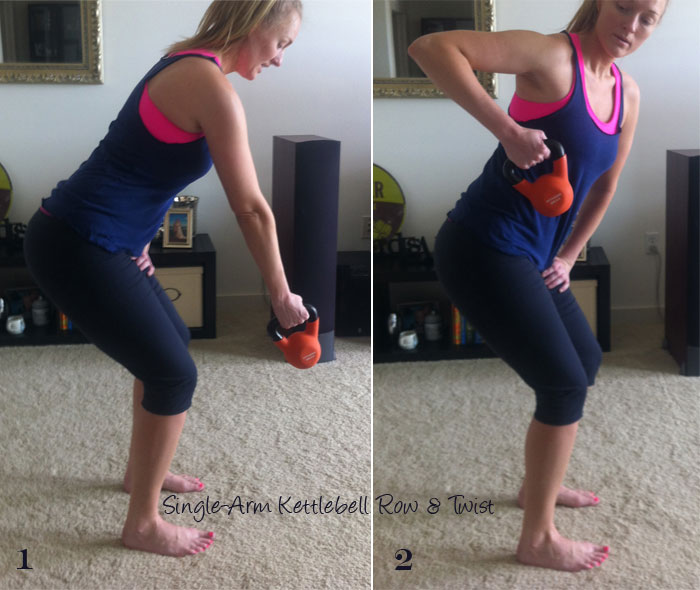
Women's Health Resistance Routine (see photos)

15 repetitions each exercise
Goblet Squat (using 10-lb kettlebell or dumbbell)
Hammer Curl to Press (8-lb dumbbells)
Dumbbell Deadlift (8-lb dumbbells)
Kettlebell Pullover (10-lb kettlebell or dumbbell)
Single-Arm Kettlebell Row and Twist (10-lb kettlebell or dumbbell)
Quick Cardio Interval
25 Jumping Jacks
50 Crunches (your way)
25 Monster Tires
10 Heisman Jumps
Women's Health Resistance Routine (see photos)

15 repetitions each exercise
Goblet Squat (using 10-lb kettlebell or dumbbell)
Hammer Curl to Press (8-lb dumbbells)
Dumbbell Deadlift (8-lb dumbbells)
Kettlebell Pullover (10-lb kettlebell or dumbbell)
Single-Arm Kettlebell Row and Twist (10-lb kettlebell or dumbbell)
Ab Work / Cool Down
50 Crunches (your way)


Wednesday, February 27, 2013

Article # 338. 5 Tips To Uncomplicate Your Weight-Loss Journey


Loosing weight is treading the difficult journey towards self-discipline but you can make the road less bumpy by simplifying your ride down the weight-loss lane. A simple diet plan with fewer rules, no-frills and everyday mini goals is far more achievable than complicated fad diets and lofty weight loss marks that turn your life around 360 degrees. So its been recommend making simple changes to your daily habits for the long haul and these basic 5 tips that will glide you over all the daily potholes as you cruise down the weight-loss highway and keep you on the diet wagon for life:
Tip#1 Make friends with your weight –loss tools: Treat the weighing scales, diet supplements and calorie apps as your friends rather than foes. Remember half the battle is in your mind so the more positively you embrace the means, the better will be the outcome. So instead of dreading the weighing scale, make it the first thing you do after you get out of bed every morning. And don’t wrinkle your nose at the protein bars, steamed veggies and meal replacement shakes…find ways to make them palatable to your taste buds.
Tip#2: Make never skip breakfast your mantra for life- You have heard it time and again that breakfast is the most important meal of the day. Eating breakfast kickstarts your metabolism to a healthy start and fuels you up for your daily activities, but make sure that your choice of foods is low in glycemic index to avoid spiking your sugar levels and hunger cravings. Stick to whole-grain cereals, barley, oatmeal, egg whites, fruits and whole-grain bread. According to data from National Weight Control Registry, majority of people who maintained a weight loss of around 30 pounds annually reported eating breakfast every day.
Tip#3: Attend to your snacking- Talking about mini changes… it’s not just the big meals you eat but your snacking as well that needs a rehaul for weight-loss results. Planning ahead is everything- whether you load up your fridge with low-fat and fat-free yogurts, nuts and seeds, or string cheese and fruits. Fix timings for your little treats to keep from straying and aim to have one 3 to 4 hours after lunch to keep your metabolism and energy revved.
Tip#4: Prolong your dinnertime- If you’re starving you are more likely to wolf down your winner so chew your food slowly which also lets your body absorb more nutrients. I like to start with a light soup or a salad and eat it slowly before I get to the proteins, etc in my meal. If nothing else drink some water. To be more in tune with you hunger signals, concentrate on taste and texture and eat with company or using fine cutlery and chopsticks to make the meal an experience rather a quick fix gulp down.
Tip#5: Tracking what you eat on a regular basis-This has lead to more weigh-loss success so jotting down your meals, in-between nibbles and beverages go a long-way in weight-loss world. But don’t beat yourself up if you find it frustrating to do it everyday. I usually just try to be mindful about my daily calorie intake or some people do it for a couple of days a week. Do whatever works for you but its important to think about your daily calorie consumption.
The less complicated your weight-loss plan is, the higher are the chances of success and after that you are more likely to stick to simple changes in your life for the long haul. So get started here on un-complicating the everyday process…